

Duration
23 minutes
Guest
-

Cillín O'Connell
Principal at Summit Law

Host
-
Alec Drew
Host of The SME Business Show
Never miss an episode & get SME business tips straight to your inbox
Episode Summary
In Ireland, it is estimated that only three in every 10 Irish people have drafted a will in preparation for their death. Death is rarely a straightforward business and preparing for the future by getting important affairs in order gives peace of mind.
In this episode of The SME Business Show, Cillín O'Connell and our host Alec Drew discuss the practicalities around preparing for you own death, from making a will to discussing your wishes with family.
Key Insights:
- Do I keep my will a secret? According to Cillín, a will ensures that your wishes are respected and executed after your passing. It allows you to distribute your assets, name beneficiaries, and designate guardians for your children, ensuring that your loved ones are provided for according to your intentions. Cillín further advices that you share the existence and location of your will with trusted individuals, ensuring that it can be easily accessed and executed when needed. This prevents delays, confusion, and potential disputes among family members, as everyone will be aware of your intentions. Ultimately, creating a will and communicating its details demonstrate your care and consideration for your loved ones, providing them with clarity and peace of mind during a challenging time.
- What happens If I don't make a will? Cillín outlines some of the consequences for both individuals and their families. Firstly, without a will, your assets may be distributed according to intestate laws. These laws may not align with your wishes or the needs of your loved ones. As a result, certain individuals who you may have wanted to include as beneficiaries may be excluded, while others who you may not have intended to benefit from your estate could receive a portion. This can lead to family disputes, resentment, and potential legal battles. Secondly, without a will, the process of estate administration can become more complex and time-consuming. It may require additional court involvement and the appointment of an administrator, adding unnecessary delays and expenses. Lastly, not having a will means you cannot specify guardians for your minor children. This can result in uncertainty about who will take care of them, potentially leading to custody disputes and emotional turmoil. Overall, the absence of a will can lead to undesirable outcomes, confusion, and additional stress for your loved ones during an already difficult time.
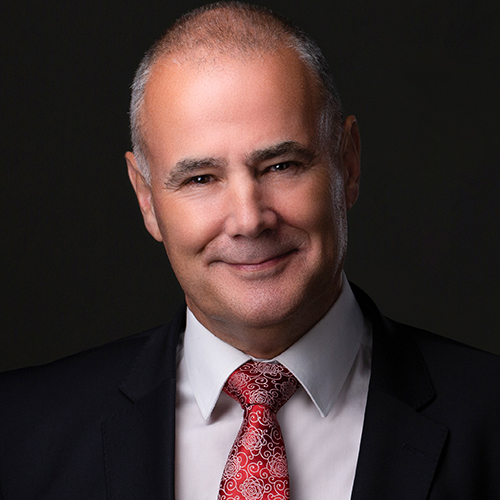
Today’s Guest(s): Cillín O'Connell, Principal at Summit Law
Cillín O'Connell, Principal at Summit Law
Cillín studied Business and Legal Studies B.B.L.S. in University College Dublin. He started his career in law as a trainee in 2006 and qualified as a practising solicitor with the Law Society of Ireland in 2008. Since then, Cillín has gone on to work on many high-profile and high-stakes cases including 7 figure compensation claims across multiple areas of the law. Cillín established Summit Law in 2016 and strives to deliver the highest quality and most accessible legal services in Ireland.
- Company: Summit Law
- Where to find Cillín O'Connell: Facebook LinkedIn
[00:00:00] Introduction
[00:00:15] Alec – Hello and welcome to the SME Business Show with me, Alec Drew. Each show focuses on one particular topic, and we’re delighted always to invite a guest, an expert on that particular topic to share their knowledge, insights, and tips to help you with your challenges. Today’s topic is all about wills, and I’m delighted to be joined by Cillín O’Connell, Principal of Summit Law.
[00:00:35] Alec – Hi, Cillín.
[00:00:36] Cillín – Thank you so much, Alec.
[00:00:37] Alec – I understand that more than 70% of the population don’t have a will. Maybe you might enlighten me as why not?
[00:00:44] Cillín – People tend to be afraid of making wills. There’s an innate fear about it, but we always try and simplify the process. And for people, there’s absolutely nothing to worry about. It’s no different to getting travel insurance or home insurance or even an extended warranty on buying a product in an electrical store. It’s nothing to be feared about whatsoever.
[00:01:05] Alec – All right, tell me exactly what a will is.
[00:01:09] Cillín – A will is a document which draws up exactly what happens to you in the event of your passing, and it tells your family or your nearest and dearest, this is how I want things done.
[00:01:19] Alec – And then there’s probate. Explain that to our audience.
[00:01:22] Cillín – What happens with probate is, when the day itself comes, when somebody passes on, the probate is the actual application of ensuring that the wishes of your will are set out and that they’re carried out.
[00:01:35] Alec- And what happens if I don’t make a will?
[00:01:36] Cillín – If you don’t make a will, what happens is, instead of it going to probate, it goes to what’s known as intestacy. And then it’s a more complicated process, but it’s not that it’s anything to worry about, but it takes more time. And it means then that if you have passed on without making a will, that your estate, everything you own, automatically goes to your nearest surviving relatives, and it’s taken right from, it could be a spouse or it could be children, and it goes further down the line then.
[00:02:07] Alec – So in terms of if I had a will, what typical timeline should I be allowing for my estate to be settled?
[00:02:15] Cillín – If somebody was to pass away and they came to their solicitor, their legal adviser, we tend to say around eight to 12 months because it’s a process in terms of getting the, it could be valuations, it could be bank accounts. You have to deal with revenue as well as deal with the probate office.
[00:02:34] Alec – Of course we do. And if I don’t have a will, what sort of timeline are we talking about?
[00:02:39] Cillín – Again, it’s at the very minimum, say, to 12 months, and it can take a little bit longer because when you don’t make a will, we have to make sure we’ve established who the beneficiaries are, who the nearest relatives are, as well as going through the process of writing out to financial institutions, getting valuations and that. So it’s the same process as probate, but it just means that we’re stuck to following what’s known as the rules of succession, your nearest surviving relatives, and going through that.
[00:03:08] Alec – Does this mean though I can’t leave my estate to who I wish to?
[00:03:12] Cillín – You can do, of course. There’s no actual requirement that says you have to leave it directly to one person or such a person, but we would always advise to make sure that family, particularly children, if they’re under 18, are provided for because that’s always paramount.
[00:03:27] Alec – So I have an obligation in terms of children under 18, but then also if I have a spouse, I presume I have some obligation there as well.
[00:03:35] Cillín – Yes. If you don’t have children, your spouse has a legal right share of 50% of your estate. If for example you have a spouse and children, your spouse would have a legal right share of one third of your estate and then the children would have two thirds. So again, this is where it’s important to get good legal advice.
[00:03:53] Alec- I might want to leave some money to the cats and dogs home or some other charity of my wish.
[00:03:57] Cillín – Of course, yeah. I mean, it’s often quite encouraged and there’s no issue at all with people leaving benefits to charities, charitable donations and bequests of any nature. But again, we’d always advise that take into account family and children and make sure that everyone is properly looked after because what we don’t want is to raise any issue at a later stage after your passing where somebody feels they have not been properly looked after, for want of a better word.
[00:04:27] Alec – You brought up our good friends, the revenue commissioners. So they do have an interest in this. Let’s just talk about how people can get the best benefit from creating a will in the first place.
[00:04:39] Cillín – It It’s always advisable because we are dealing with revenue to make sure you get tax advice or speak to your financial advisor. But in terms of drawing up a will, if a father or a mother was to leave their son or their daughter an inheritance, they have a tax-free threshold as it stands today of €335,000. So if you have three or four children, the estate may not amount to more than that figure. And it would mean then that the children, if they haven’t received any prior inheritance or gift, should not have any inheritance at all. But it’s where the estate is over that figure. Or if there’s only one child, you really need to look at options to make sure that you’re minimizing the taxation, which is 33 and a third of anything over and above what the after your threshold allows.
[00:05:30] Alec – I think a lot of people are under the misconception that you can virtually leave whatever you like to your family.
[00:05:36] Cillín – No, absolutely not. You’re governed by revenue rules. And the threshold, it was a lot higher previously. I think it was over 500,000 about 15 years ago. But it’s 335,000 per child. Or if it’s a niece or a nephew or a gift or an inheritance from a grandparent to a grandchild, it’s just over 32,000. Or indeed, if you were to leave funds to a friend, somebody who’s not a family relative, that’s 16,250. So you’re very limited with what you can do without incurring any taxation.
[00:06:08] Alec – So it could mean while you’re leaving a very nice sum of money to a friend, actually what they’ll get could be far less than they anticipated.
[00:06:14] Cillín – And that’s where you get – it’s really important to get tax advice. Any lawyer can help with that. But we always say, not only speak to us, but speak to your tax advisor on that.
[00:06:27] Alec – In In terms of wills, OK, let’s say we’ve made the will. But what we often discover is that it’s pushed away in a drawer somewhere, or maybe it’s in a bank vault, and nobody knows anything about it.
[00:06:38] Cillín – It’s something that happens quite a lot. And very often, someone will have passed away, and the family will know that – or they’ll feel that there was a will drawn up. They just don’t know if it was with a solicitor, or like you said, if it was in a safety deposit box or a bank vault. What we always say to people is, tell people where the will is, and even send them on a scanned copy. Some people may not want to do that. But if you’re comfortable doing that, let your executors know, the people who are looking after things, here’s a scanned copy, but the will need to know where the original– it’s absolutely paramount, because the probate office, to draw up a grant of probate, have to have the original will.
[00:07:14] Alec – In terms of the construction of the original will, what are the key points that must be included in?
[00:07:21] Cillín – First and foremost, you need to have what’s known as an executor of the will. And this is the person who carries out your wishes. Whatever you’d like set out in the will, your executor– and it can be more than one person– is the person who’s left with the task of saying, right, here’s this individual’s will, and I’m going to make sure it’s dealt with. But they can also be named in the will. They can be a beneficiary. So it could be– well, very often, a husband and a wife will draw up wills, and they’ll appoint each other as executors. And then they’ll leave their estates to each other, or they’ll make allowance for children as well. So that’s your first port of call. You need your executors.
[00:07:58] Alec – I think there’s a misconception that people who were executors of a will couldn’t be part of it.
[00:08:04] Cillín – Oh, absolutely not. I mean, you want whoever’s looking after your estate, it’s best to have them be part of it and to have control of it and know what’s going on. And that’s why it’s easier just to have husbands and wives as a very much an example, or indeed family members. Because it just means that you’re making sure that it’s your family that are controlling what your estate was and your best interest.
[00:08:28] Alec – How do we know that we actually have the original will? Because people can make subsequent wills.
[00:08:32] Cillín – You really cannot have two wills in existence at a time, but it’s very common for people to want to update their wills. Say, for example, if they’ve had children or they’ve come into more assets. No problem at all. But as soon as the new will is drawn up, we need to make sure that the old will is subsequently destroyed. And it’s just– you can’t have two wills in existence at any one time.
[00:08:55] Alec – So the one that’s dated most recent is the one that counts.
00:09:00] Cillín – Absolutely. It’s important to whenever a new will is drawn up that, again, the same rules apply. Let your executors know, or if you don’t want to tell them what’s in the will, just let them know where it is and let them know that the previous will has now been destroyed so everyone knows exactly what the position is.
[00:09:17] Alec – I suppose Killian, there has been times where somebody has maybe created a will with you and then gone on to another solicitor’s practice without ever telling you about it.
[00:09:27] Cillín – In that instance, we would have to write out to the previous party who held the will and indeed the party who has the new will just to make sure there are no two wills in existence. Again, it’s paramount because the executors, when they’re part of lodging the application to the probate office, they’re signing sworn documents. So everything has to be dealt with. And this is whereby it does take time. We need to make sure all avenues have been checked.
[00:09:53] Alec – All right. I’ve seen programs on television where you have will hunters. Yes. Tell us a bit about that.
[00:09:58] Cillín – Well, this goes back to if you haven’t made a will to a certain extent and you’re trying to trace beneficiaries and it could be distant relatives or indeed if a will cannot be found. And to a certain extent, the same rules apply whereby they’re going to have to try and see if a will can be found, but if not, they’re going to have to try and trace the beneficiaries. And this is very common where people would have possibly lived here in the 50s and 60s and emigrated to other countries. So we’re seeing them there. There’s a lot of these companies who are, well, they’re UK based, but they’re based here, but they tend to be from people who have emigrated and they’re trying to trace relatives in that particular country.
[00:10:40] Alec – So I’m gathering the charge of a relative fee for the work being done here.
[00:10:45] Cillín – Absolutely. And take up a large part of the estate and to a certain extent the percentage of the estate. So it’s definitely something whereby the more people who know where your will is, the better. It just means it cuts out any of that extra cost.
[00:11:00] Alec – One of the things I think we often discover is that in terms of wills, somebody will make one maybe 10 years ago, but it was 10 years ago. In your own case, how do you deal with that? Do you know that you know you’ve got the most recent version of the will?
[00:11:16] Cillín – This is very thorough. You ask them, have you made a will previously? Have you contacted the person who held the will previously and made them aware that you have this most current will, say it was 10 years ago? So if there was one they made, we’ll say 15 or 20 years ago, we have to absolutely know that it has been destroyed. And it’s a safe protocol to write to if it was with a banking institution or a previous legal firm to write to them to ensure that they do not have a current will in existence. It stops any issues.
[00:11:45] Alec – OK, we’ve discovered a will, we’ve discovered a bank account, we’ve discovered a safety deposit box, and in it is an old will. What is likely to happen then?
[00:11:55] Cillín – The previous will will very often void the existence of the new will, or it could potentially lead to a dispute. So this is whereby we need to establish the facts of, especially if there’s a difference in the first will, in the older will as opposed to the newer will. So this is whereby you have to advise the executors and you go through the process of succession and the previous will, because it always goes back to.. A prime example, if the second will, the more recent will, if it was established, for example, that the person who drew up the will was of unsound mind, that would potentially invalidate the will. Or what can happen is both of the wills become invalidated and the whole estate goes into intestacy. So this is whereby the dispute can happen. You can have a valid will, but if you have two of them, it can have the consequence of invalidating everything. And again, intestacy applies. And regardless of what’s in those wills, it goes then to your nearest surviving relatives. But that may not be what the person wanted in the first place. But if you have two wills, that can very often be the case.
[00:13:02] Alec – Do you come across situations where wills are disputed? Because I don’t believe that person was of sound mind, even though they may well have been.
[00:13:09] Cillín – Absolutely. It is an unfortunate circumstance, but it does happen. The courts here in Ireland are very particular. The courts do not like to look behind the wishes of somebody’s will. There has to be a solid reason. And if it’s of someone of unsound mind, this is where the litigation comes in. And you may need to get treating doctors and look at medical records to show that they were suffering from an impairment at the time. But it’s not always the case that it’ll be enough to nullify a will. So if anyone’s thinking of taking some sort of legal dispute, get advice beforehand, because it’s very time consuming, it’s very costly, and there is a very high threshold. That’s probably the best way to explain it for somebody to satisfy the court that really there’s an issue here and this will isn’t valid or needs to be rectified.
[00:14:04] Alec – I suppose I’m coming back to just the issue again of two wills being in existence at the same time.
[00:14:10] Cillín – It’s one of the first things that any lawyer should look for and establish the facts of whether a previous will was drawn up. I had one previously whereby a client came to me to draw up a will. And we found she explained that she had a previous will with a previous solicitor. And we wrote out to the previous solicitor. And as soon as we had the new will in place, the previous one was destroyed. And that’s it. It’s null and void. But again, we have to go through our processes. Your legal adviser will always do that. But sometimes people will draw up a will themselves and they won’t actually go to a lawyer, which is not uncommon. But again, you need to tell your family or your executors, I have a will. It was drawn up at such a time. Because if you have more than one will in existence, then the rules of succession apply and those wills are in difficulty.
[00:15:00] Alec- Perhaps Just explain to our audience about trustees and the role that they have.
[00:15:06] Cillín – Yes. If you have an executor, they can look after the wishes of your will. But if you have a beneficiary in your will, say it’s a child who’s under the age of 18, or indeed it’s someone who is of… It could be someone of unsound mind as we discussed. A trustee is someone who is appointed to look after their portion of the estate. It could be a property. It could be stocks or shares or earn amount of money. They can never own that asset. They can never put it in their own name, but they can invest it on behalf of the child until that child turns 18. But on that point, we would always recommend that any beneficiary who’s under 18 to get their estate, not at 18, but 21, 23, 25, when they did just a little bit more sense. But a trustee has a very important role. And again, they have… This is dictated by the law in Ireland. So you need to explain to whoever’s drawn up the will that if you’re appointing this person to be an executor or to be a trustee, that they need to be aware that it comes with… It’s not that they’re strict rules, but they’re particular rules. So they need to know what they’re doing.
[00:16:18] Alec – Yeah. So they have a lot of responsibility.
[00:16:18] Cillín – Huge responsibility.
[00:16:18] Alec – And so therefore, they have their hands on the bank account. So they have to be very careful of how any money is spent.
[00:16:28] Cillín – Completely. I mean, they can invest it on behalf of a child. It could be to put funds in a pension fund. It could be to buy a property, but they can never actually gain any profit whatsoever from the estate. And this is whereby if you’re speaking to your legal advisor and you’re drawing up a will or you’re looking to talk about who do I want to be a beneficiary, who do I want to be a trustee, this is the conversation we can have. So when I think about it, if you have three or four children, there might be one who you say, “Listen, they’re safe betsyou Ci. They’d be the person I would trust.”
[00:17:00] Alec – In terms of the overall cost of drawing up wills, maybe talk to us a bit about that.
[00:17:05] Cillín – Generally it’s not a huge cost to draw up a will at all. I know there’s firms out there that may charge 100 euros or 200 euros. We don’t tend to charge clients. We offer it as an add-on service because it’s there simply to have your affairs in order. A will is a snapshot. It’s a snapshot in time of what we might own, but that’s why it’s subject to change. People can always amend them. People can always update them at a later stage. That’s something we always recommend and it allows us to keep in contact with our clients and to offer that service going forward.
[00:17:37] Alec – For most people, the amount that’s going to be in that inheritance, perhaps it’s not huge. It’s probably the family home or something like that. But there are situations where businesses are involved.
[00:17:50] Cillín – Yes, absolutely. I’ve dealt with situations whereby it might be a husband and a wife who are in a business and they’re running it together. So with these issues in terms of estates, you need to make sure that they’re properly valued because again, we can’t lodge anything into the probate office until it’s gone through revenue. And they’re going to like evaluation for a property. They’re going to want to see evaluation of a business and it all has to be set out.
[00:18:20] Alec – I presume that causes some problems when it comes to a business and the evaluation of a business as opposed to something like bricks and mortar, which is much more easy to put a tangible value on.
[00:18:31] Cillín – Yeah, things like goodwill can be difficult and it does depend on the type of business. If it’s, for example, well, to use an example of like an insurance business, it’s very easy to quantify what that is in terms of what it’s worth. But in my own industry, for example, it’s very difficult to quantify as a service industry. What it’s worth. So this is whereby you would get an independent expert to come in. It could be an accountant or it could be an arbitrator to come in and value that business because revenue are going to look for that and it all comes back to the taxation element. And they want to know that it’s very easy for an estate agent or a valuer to value an asset, but it has to be done as well on a commercial purpose for that business.
[00:19:12] Alec – So in other words, it’s not just one person, but it could be the revenue and it could be accountants having a dispute with one another over evaluation.
[00:19:20] Cillín – Very much so. And if, for example, a dispute like that arises, it needs to be mediated. Again, we’re always saying to people, don’t go down the rule, the role of trying to litigate it, to try and create a dispute. If you have an arbitrator or a mediator who can step in and look to come up with that valuation and it means that revenue are happy, they have this independent person to sign off on it. Again, it takes the heat out of it and it just means that the probate process can continue.
[00:19:50] Alec – I suppose as we come close to the end of this, what advice can you think of off the top of your head as I throw it out to you? Would you like to say that people should follow up?
[00:19:59] Cillín – Have a conversation with your legal advisor. If you’re thinking about drawing a will, it’s nothing to worry about. As I alluded to at the start and as you mentioned, with the like of over 70% of people don’t have one, people have this innate fear about it. There’s nothing to fear. Have a conversation with your legal advisor. Let them know what you’re thinking about, what your thoughts are. Nothing has to be decided upon immediately and your legal advisor will be able to take you through the process. We’d always recommend you get tax advice to make sure that and we can help you draw up the will, but it’s done in a tax efficient manner. But at the same time, you want to make sure that once somebody draws up the will, that they have peace of mind and you can forget about it then. But just once it’s drawn up, let people know where it is. That’s the most important. I think that’s very, very important. Let people know exactly where it is.
[00:20:45] Alec – Where can people find out more about you Cillín and also Summit Law?
[00:20:50] Cillín – Well, obviously there’s our website, summitlaw.ie.
[00:20:52] Alec – Good.
[00:20:54] Cillín – And you’ll see my face on it, god love you. And we’re based in Dublin 12. But in terms of what we do, we offer a comprehensive service for everything like family law and litigation for probate and also for things like conveyancing, buying and selling and remorgaging homes. But we’re accessible, reach out to us. You can call us, you can email us and we’ll always look to make sure that your interests are looked after.
[00:21:22] Alec – Thanks to Killian O’Connell, Principal with Summit Law, for coming into the SME Business Show and sharing so many tips around wills and probate. Don’t forget to join me, Alec Drew, again next time where we’ll have another expert speaking on the topic and sharing their knowledge, insights and tips to help you with your challenges. If any part of this show resonated with you, why not reach out to us across all the social media channels, The SME Business Show. Thank you for your company. And don’t forget to join me, Alec Drew, again next time on The SME Business Show.
