[00:00] Introduction
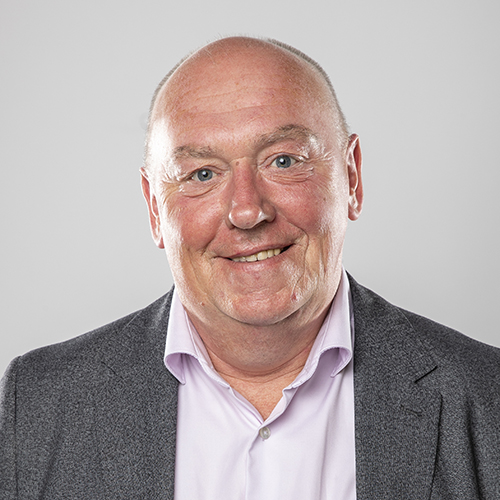
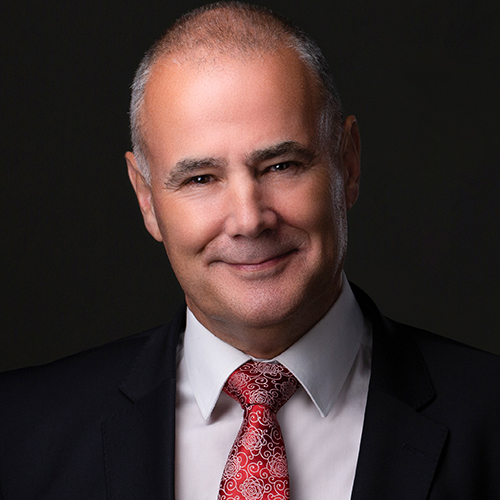
[00:15] Alec – Hello and welcome to the SME Business Show with me, Alec Drew. In our charity spotlight today, I’m delighted to be joined by John Scanlon, Finance and Services Manager of St Ultans Campus, Cherry Orchard.
[00:29] Alec – Hiya John.
[00:29] John – Hey Alec, how are you?
[00:30] Alec – Tell me the genesis of the St Ultans Campus.
[00:33] St Ultans Campus came from a need for an education and care centre in Cherry Orchard. We are based in Cherry Orchard, Dublin 10, we’re just west of Ballyfermot and the area was populated in the 80’s with relocation from the city centre and from the north-east inner city and various locations around Dublin. The services didn’t exist. The 90’s was a difficult time in parts of Dublin. Cherry Orchard, would have experienced that pretty extensively. Also there was no schools in Cherry Orchard, people had to go to Ballyfermot to go to school. So school attendance was low, there was a lot of social problems, there was riots in Cherry Orchard in the 1990s, and the community came together and wanted to build a school for Cherry Orchard, not just in Cherry Orchard. And there’s a very big difference in just the use of those two words.
[01:28] Alec – Tell me about the model and how it’s benefiting the community.
[01:31] John – Yeah, the model came from that little difference that exists between those two words. The model is based on a care and education model. Simply put, a child won’t learn if they’re hungry, scared, tired, you change the word, whatever it may be. And a lot of the children in Cherry Orchard at the time, hunger was an issue and there was all kinds of significant issues that they were dealing with. So, what happened was that we have an early years which has a hundred children in it. We have a primary school that has 400 children in it, including 18 in an autism unit, specifically three classrooms. The school and the early years have a joint curriculum, joint enrolment policy, etc. So it’s fully integrated teachers and early years staff coordinate together continuously. And then we have a social care service that supports the most at risk children. So we have a program called Integrated Care and Education or ICE as we call it internally, which helps the children who most need it. So about 80 children every year will receive things like play therapy, counselling, in school support, out of school support, pretty much 46, 48 weeks of the year. Because the early years and the social care don’t close except for a couple of weeks in summer and Christmas. The other thing then is of course that we provide hot meals for every child in the building and we’ve been doing that with our own staff that have a fully operational and functional kitchen and a qualified chef that has been doing that since 2011 providing nutritious meals for every child.
[03:12] Alec – Naturally you need funding, so what does the model look like there?
[03:15] John – The model is that we are about 80% state funded. 20% of our funding comes through philanthropic activities or through business operations that we do ourselves. So we generate a lot, we generate money ourselves.
[03:30] Alec – I suppose we live in a cynical world where money is concerned particularly when it comes to charities. Talk about the sort of governance structures that are out there.
[03:38] John – Yeah we have two legal entities on site. We are governed by the Education Act so we can’t have one as much as we would like to ourselves. So we have St Ultans Primary School, which is constituted under the Education Act, and then we have St Ultans Childcare Project, which is a company limited by guarantee, registered charity, etc. All the accounts are fully audited, and the board meet monthly, full financial management accounts produced at every board meeting, and this exists for both school and care because there’s finance meetings in advance of those, that we all take, ensure that everything is properly done and that the organisation is running very smoothly and has the resources it needs.
[04:21] Alec – And as I understand it, the board members are not remunerated in any particular way?
[04:26] John – No, it’s all voluntary.
[04:26] Alec – Which is great. A lot of the help you receive is support from the community and companies around. How does that work when it’s not money?
[04:34] John – Yeah, I mean, there’s… There’s really three ways in which people can actually help in St Ultans and what they do. Number one is financial, number two is services. So we have companies for instance that help us whereas we don’t have the staff to do it or we’d have to pay someone externally, companies will come in and cut the grass for us, they’ll deal with the landscaping. We have had companies who have brought their staff in and just organized days for the children, particularly during summer, that’s met a lot of their CSR requirements that they’re trying to meet. And we’ve had companies that have had, say, foreign staff who have taught the children foreign languages. And particularly in the secondary school kids we would deal with, who would be doing exams and French or German or whatever would be the case. So it’s wonderful when things like that happen.
[05:22] Alec – Well, the world is your oyster when it comes to that. What are the sort of projects you’re trying to build out at the moment?
[05:28] John – There’s two primary projects that we’re building out, the continued expansion of the integrated care and education model. It’s not one that fits the state’s boxes and that it’s a nice little tick that goes in this section or that section. So it’s a difficult one for us to fund and what we want to do is expand it because we have a waiting list for the services that are existing there. And this benefits the child absolutely directly. It helps them in their everyday life and helps them get more out of their school experience, their education and their time in St. Alton’s and on then in later life. Early intervention is the key, so if we can intervene early in the child’s life and give them the tools, then obviously this stays with them for the rest of their life. The other program that we’re developing is our parental partnership and that’s a multi-layered approach that can be organizing for activities and people learning new skills just for leisure or it can be third level. There is 8% third level in Cherry Orchard as of 2016. We’re still waiting on the 22 figures, so I can’t give you those. So the history of education doesn’t exist. And if parents are themselves getting third level, then what that’s doing is becoming a role model for children. So there’s multiple advantages to doing that.
[06:50] Alec – And while you’re helping the children in terms of academia, there’s a lot of other areas that you’re also very proud of out there.
[06:58] John – Yes, I mean music in particular is the one that would pretty much stand out within St Ultans because every child learns a musical instrument and we have an orchestra that has played in the National Concert Hall, in the Point Archery Arena with Roger Waters, they’ve been on the Late Late Toy Show, they’ve been everywhere and that orchestra is open to every child. A lot of our children who went to secondary school come back and we have adults who were children as part of the program who are now in third level learning music and making a career of it. So it’s really wonderful. Sport is also a big one in the area and a lot of our children would be very good boxers.
[07:46] Alec – I have seen them at Roger Waters, I’m delighted to say so, and very good they were. How can people help you?
[07:53] John – I suppose there are three ways and the first one I would say to anybody is to come and visit because if you come to St Ultans you experience it in a different way than I could describe it. Everything that happens just creates a wonderful joyous feeling when you walk in. It’s a very bright, colourful and airy building and there’s just a sense of joy around in the building, so it really is a place to visit. In addition to that, it’s a place to learn about this unique model of care and education and even just talk about it, just to create an awareness of it. We have been recently at the Joint Oireachtas Committee on Children, where for the first time the model of care and education was actually published in a report, which is absolutely fantastic for us, because we would like to see that expanded into other areas. It’s a tool and a mechanism to help children just become more of themselves, give them more tools and more resources to be. The second way obviously is financial and the third way would be if companies can support whether it’s directly with the children or through services.
[09:00] Alec – What is the future for St Ultans?
[09:02] John – St Ultans would like to be and is working towards being a part of a community that creates hope for the children, where it’s a place where the children have the tools that they need and gives them an equal opportunity as they would have in other areas, in other parts of Dublin or Ireland. Education and care are the vehicles in which we use to try and create that. And we are hoping that the education campus itself will expand, surrounded by care that will… Enable or support that process which is taking place continuously throughout Cherry Orchard.
[09:43] Alec – And I understand that you’d like to see this model rolled out across the country?
[09:46] John – Yes.
[09:47] Alec – Because this is a unique model.
[09:49] John – It is a unique model for Ireland, but the conditions that exist in Cherry Orchard will also exist in other areas of the city and of the country. Others have looked at this model and they’ve implemented various bits. The unique thing about St Ultans is that everything is on one campus. So all supports are fully available at any point or moment in time for the child. If that can be rolled out and if people can build buildings initially from that phase and that perspective it will enable an easier application of the model.
[10:22] Alec – Where can people find out more?
[10:24] John – stultanscampus.ie, stultans.ie, john@Stultans.ie and I’m sure you’ll publish these somewhere at the bottom of the screen.
[10:34] Alec – Thank you very much to John Scanlon, Finance and Services Manager of St. Alton’s Campus for coming into the studio today. If any of the items we discussed today resonated with you in any way, please reach out to us across any of the social media channels, The SME Business Show. Thank you for your company and we look forward to seeing you again soon.